


Military strength in africa is evolving. It is all about investments in drones, tanks, fighter jets, and modern warfare. This writer did a cursory research on the strongest military Africa, taking facts from the global fire power index, Forbes, Wikipedia, and the country budgets for defence. Though it is beyond budgets when it comes to military strength, because some of these budgets are not realised, nor some are for internal security
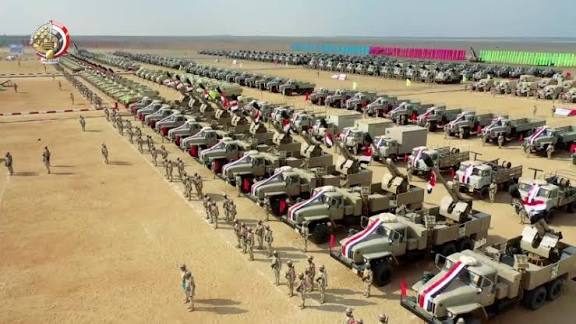

According to the Global Fire Power Index, Egypt has the strongest military in Africa despite not having the largest budget for defence in the continent.
The following are the countries with the strongest military strength in Africa:
1. EGYPT
The Egyptian Armed Forces are among the most powerful in Africa and the Middle East, with a total strength exceeding 1.2 million personnel, including 440,000 active-duty troops and 480,000 reserves. Founded in 1820, the military (headquarters in Cairo) includes strong Army, Navy, Air Force, and Air Defence branches. They are highly mechanized with substantial armoured, air, and naval capabilities. According to ISPI, as of 2025, Egypt leads African military rankings and is ranked among the top 20 globally.
Branches & Equipment: The military is composed of the Army (Ground Forces), Navy, Air Force, and Air Defence forces. The Air Force operates a diverse fleet, including F-16s and Rafale jets.
Role & Economic Influence: The military is responsible for national security, border defense, and is heavily involved in the national economy, with, according to an ISPI article, military companies managing significant portions of public construction and key industries since 2013.
According to the annual Global Fire Power Index, GFP ratings, Egypt is rated 19 out of 145 countries in the world. The nation holds a power index score of 0.3651 for the 2026
2. Nigeria Armed Forces:
Nigeria is the firat country ton use combat drone in Africa The 2025/2026 Global Firepower (GFP) index, the Nigerian military is ranked as the 3rd most powerful in Africa31st33rd globally. The Armed Forces of Nigeria have improved their ranking after experiencing a decline to 39th in 2024, driven by increased investment in defence and modernization of equipment under the current administration.
Here is a breakdown of the current strength of the Nigerian military:
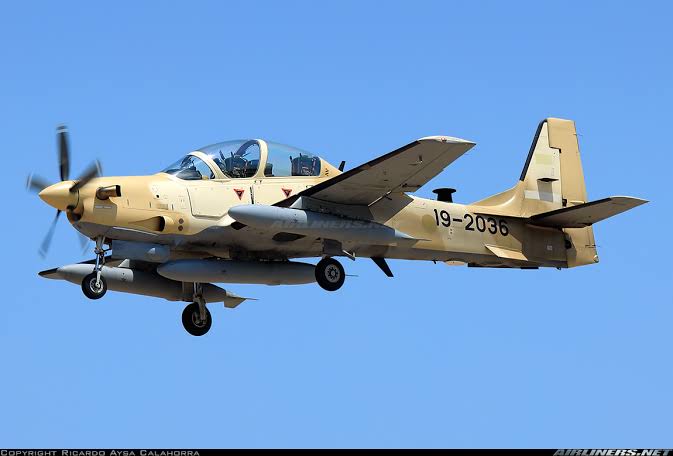
Total Active Personnel: Approximately 230,000 to 280,000.
Total Personnel (including Paramilitary): Estimated at over 300,000.
Role: Primarily focused on internal security, counter-terrorism (especially in the Northeast), and peacekeeping operations.

Air Power (Nigerian Air Force)
Total Aircraft: Over 140, including fighter jets, attack helicopters, and trainer aircraft.
Key Assets: 12 A-29 Super Tucano light attack aircraft (used for counter-terrorism), CH-3A UCAV drones, and F-7Ni fighter jets.
. Land Power (Nigerian Army)
Tanks: Approximately 330 to 376.
Armoured Vehicles: Over 2,000 to 12,000 (figures vary based on whether light armoured vehicles are included).
Artillery: Includes 44 self-propelled artillery, 349 towed artillery, and 47 rocket projectors.
4. Naval Power (Nigerian Navy)
Total Assets: Over 133 vessels, including frigates and corvettes.
Role: The navy is ranked among the largest in Africa, actively patrolling the 853 km coastline and the Gulf of Guinea to fight piracy and protect oil assets.
Defence Budget and Modernization
Budget: The annual defence budget has increased, with reports indicating it exceeds $3 billion USD in 2025/2026, or roughly 1% of the GDP.
Investments: Recent acquisitions include drones, combat aircraft, and armoured vehicles to combat
Regional and Global Standing
African Rank: 3rd (behind Egypt and Algeria).
Global Rank: 31st (as of early 2026, according to recent updates).
While the military is strong on paper, it faces significant challenges regarding internal security, including fighting armed groups, banditry, and terrorism, which have required a massive, long-term commitment of resources and personnel.
3. South Africa: South Africa is the third on our list. South Africa Military strength. Is one of the best in Africa. The South Africans are so good that they used them mercenaries to other Africa countries. The greatest experience South Africa Army has is interfering into other Southern African countries
According to Wikipedia, The South African National Defence Force (SANDF) comprises the armed forces of South Africa. The Chief of the SANDF is appointed by the President of South Africa from one of the armed services. They are in turn accountable to the Minister of Defence and Military Veterans of the Defence Department.
The South African National Defence Force (SANDF), commanded by President Cyril Ramaphosa and Minister Angie Motshekga, is a professional force with roughly 71,235 active personnel (35,424 in the Army). It is ranked 40th in the 2026 Global Firepower, focusing on peacekeeping, border security, and domestic stability with a 2025/26 budget of R58 billion.
Angolan Armed Forces: The fourth on this list.
The Angolan Armed Forces (FAA) is among Africa’s largest and most experienced militaries, but decades of underinvestment, ageing Soviet-era equipment, and limited maintenance capacity have eroded much of its effectiveness.
The FAA, a tri-service force, comprises the Army, Air Force, and Navy, fielding over 100 000 active-duty personnel and some 10 000 paramilitary forces. The Army forms the backbone of Angola’s military capability, with the Air Force providing a valuable and regionally unmatched heavy-lift capacity. The Navy, long neglected, is being modernised as security and piracy concerns escalate off the Angolan coast and throughout the Gulf of Guinea.
Broader modernisation efforts have had little impact thus far, as FAA funding has steadily declined in real terms over the past decade, a trend that constrains the force’s overall combat capability. Efforts to foster a domestic defence industry have largely stalled; however, Angola continues to pursue not only enhanced regional ties but also to diversify its defence partnerships away from its historical reliance on Russia, with recent defence agreements with the UAE and others signalling a renewed intent to strengthen strategic autonomy. Despite these challenges, the FAA remains a significant regional force, increasingly focused on modernisation, maritime security, and supporting stability in Central and Southern Africa.
4. The Angolan Armed Forces (Portuguese: Forças Armadas Angolanas) or FAA is the military of Angola. The FAA consist of the Angolan Army (Exército Angolano), the Angolan Navy (Marinha de Guerra Angolana) and the National Air Force of Angola (Força Aérea Nacional de Angola). Reported total manpower in 2021 was about 107,000.[2] The FAA is headed by the Chief of the General Staff António Egídio de Sousa Santos since 2018, who reports to the minister of National Defense, currently João Ernesto dos Santos.
According to Defense Web;
The Angolan Armed Forces (FAA) is among Africa’s largest and most experienced militaries, but decades of underinvestment, ageing Soviet-era equipment, and limited maintenance capacity have eroded much of its effectiveness.
The FAA, a tri-service force, comprises the Army, Air Force, and Navy, fielding over 100 000 active-duty personnel and some 10 000 paramilitary forces. The Army forms the backbone of Angola’s military capability, with the Air Force providing a valuable and regionally unmatched heavy-lift capacity. The Navy, long neglected, is being modernised as security and piracy concerns escalate off the Angolan coast and throughout the Gulf of Guinea.
Broader modernisation efforts have had little impact thus far, as FAA funding has steadily declined in real terms over the past decade, a trend that constrains the force’s overall combat capability. Efforts to foster a domestic defence industry have largely stalled; however, Angola continues to pursue not only enhanced regional ties but also to diversify its defence partnerships away from its historical reliance on Russia, with recent defence agreements with the UAE and others signalling a renewed intent to strengthen strategic autonomy. Despite these challenges, the FAA remains a significant regional force, increasingly focused on modernisation, maritime security, and supporting stability in Central and Southern Africa.
5. Morroco: According to Wikipedia, The Royal Moroccan Armed Forces have experience in counter-insurgency, desert warfare and combined air-land operations. Further experience has come from participating in peace-keeping operations. The Royal Moroccan Army, officially The Royal Army (Arabic: الجيش الملكي, French: l’Armée Royale) is the branch of the Royal Moroccan Armed Forces responsible for land-based military operations.The army is about 175,000 troops strong. In case of war or state of siege, an additional force of 150,000 Reservists, and paramilitary forces, including 20,000 regulars of the Royal Moroccan Gendarmerie, 25,000 Auxiliary Forces and 5,000 mobile intervention corps regulars come under the Ministry of Defence command.
Army forces from Morocco have taken part in different wars and battles throught history, from the Iberian Wars with the Almoravid Empire in the 11th Century to the recent Central African Republic conflict.